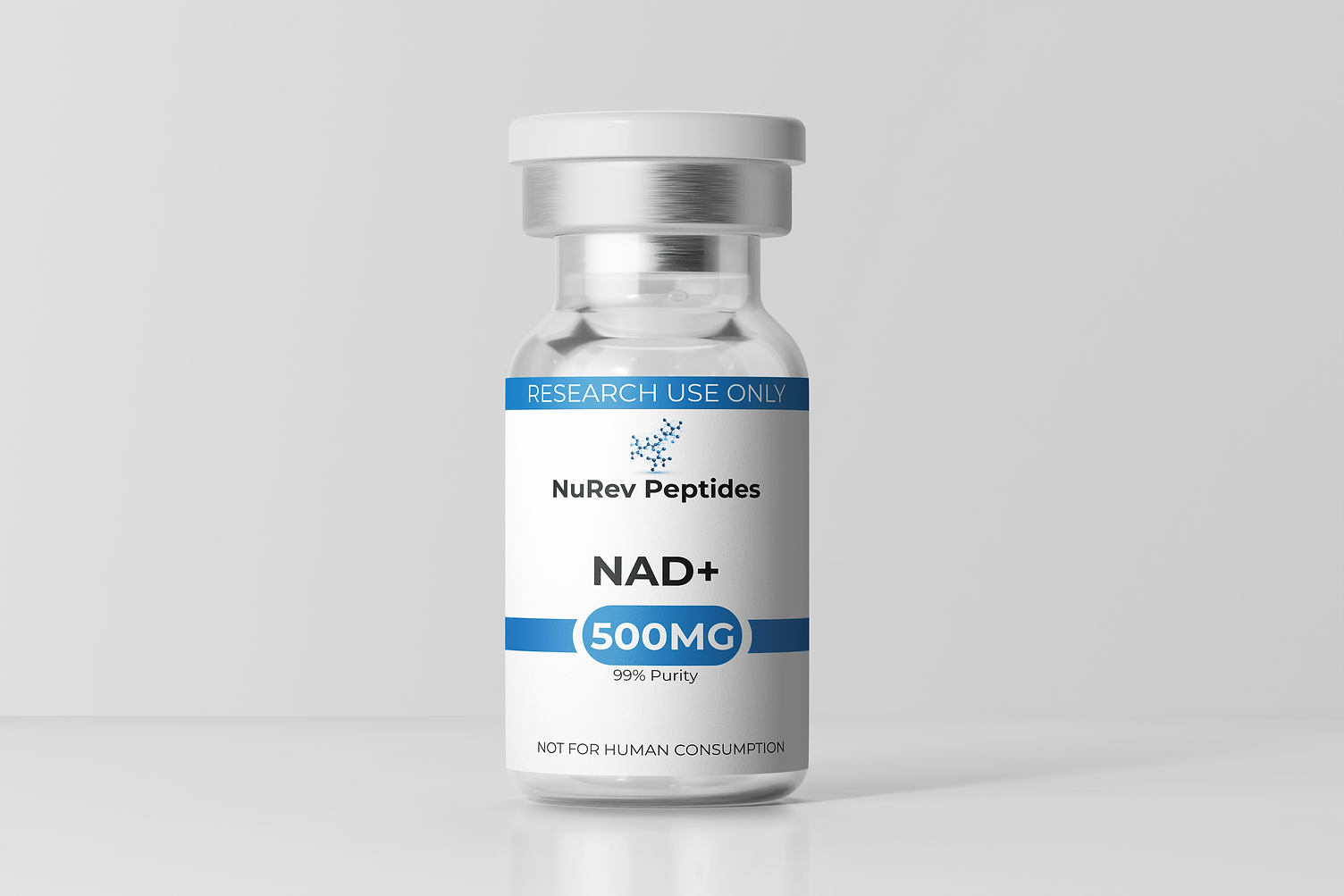
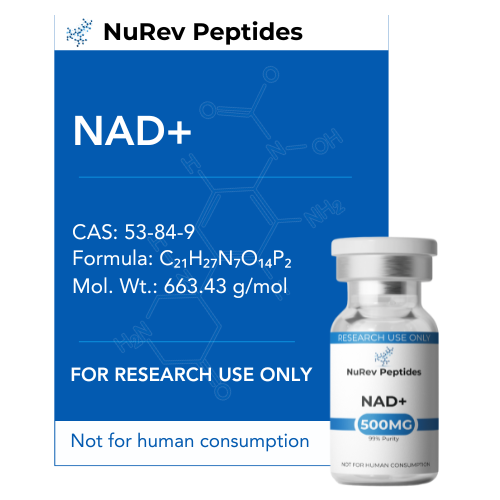
NAD+ 500MG
$169.99
Description
Essential Key Takeaways About NAD+ 500mg: Benefits and Research Applications
Nicotinamide adenine dinucleotide (NAD+) is widely recognized in scientific literature as a core coenzyme involved in numerous cellular functions. Researchers purchasing NAD+ for laboratory work must consider its molecular characteristics, appropriate storage practices, and supplier quality. This overview summarizes the main points scientists should understand before obtaining NAD+ for research.
As interest grows in how NAD+ contributes to cellular energy production, DNA repair activity, and metabolic pathways, demand for research-grade material has risen considerably. Proper knowledge of its structure, handling steps, and limitations tied to research-only designation is essential for achieving consistent experimental results.
NAD+ is composed of two nucleotides linked by phosphate groups — one containing adenine and the other containing nicotinamide. It exists in two principal forms: the oxidized NAD+ and the reduced NADH. The “+” denotes the oxidized form commonly required for redox reactions in biological systems.
Research consistently shows that NAD+, one of the most abundant coenzymes in human and other living cells, plays a key role as an electron transporter across multiple metabolic pathways. Its molecular configuration supports essential processes related to energy production and cellular function, which is why it continues to be a major focus in metabolism-based scientific studies.
Mechanism of Action
NAD+ functions as a coenzyme in redox reactions and is central to metabolic and energy-producing processes. It also serves as a substrate for important enzyme families — including sirtuins, PARPs, and ADP-ribosyltransferases — which participate in cellular regulation, DNA repair responses, and various metabolic pathways.
Studies examining aging biology have linked declining NAD+ levels with reduced cellular efficiency and age-related functional decline. Maintaining sufficient NAD+ levels in laboratory models has been associated with healthier aging markers and cellular resilience.
Additional research has examined NAD+ in relation to:
- Circadian rhythm processes
- Gene expression pathways
- Stress-adaptation mechanisms
- Cellular repair activity
- Metabolic optimization
Research Studies
Current scientific work is investigating NAD+ supplementation across several therapeutic research targets and biological functions. Animal studies indicate that elevating NAD+ levels may support healthier aging markers and general cellular activity.
Preclinical research has explored different delivery formats — such as sublingual forms, nasal sprays, and NAD+ injection protocols — to understand how each influences energy and cognitive-related pathways. Human applications require further study.
Summary of Research Areas
| Research Area | Animal Model Findings | Potential Applications |
|---|---|---|
| Metabolic Function | Improved glucose regulation | Type 2 diabetes research |
| Neuroprotection | Enhanced stress resistance | Cognitive decline studies |
| Cardiovascular Health | Improved cardiac resilience | Heart health investigations |
| DNA Repair | Higher PARP activation | Cancer cell research |
Additional studies on NAD+ precursors — nicotinamide riboside (NR) and nicotinamide mononucleotide (NMN) — have shown encouraging results in supporting cellular NAD+ production. Research suggests possible benefits for mental clarity and cognitive support, although ideal dosing strategies remain under investigation.
NAD IV therapy and related laboratory protocols are also being studied to examine how various delivery routes influence cellular uptake and metabolic activity.
Storage and Safety
NAD+ requires careful storage to maintain stability. Research-grade NAD+ is usually supplied as a lyophilized powder and should be stored:
- 2–8°C for short-term use
- –20°C for long-term preservation
The compound must be kept in a dry, temperature-controlled environment away from direct light.
Standard laboratory safety guidelines include:
- Airtight container storage
- Protection from moisture
- Temperature monitoring
- Use of personal protective equipment
- Adequate ventilation
Prepared NAD+ solutions may have different stability profiles and require storage according to formulation-specific recommendations.
Research-Only Designation
All NuRev Peptides products, including NAD+, are categorized strictly as research chemicals. They may be used only for in-vitro laboratory procedures and are prohibited from any human or veterinary application. These compounds must not be misbranded or repurposed as therapeutic agents.
Researchers using NAD+ for experiments involving cellular metabolism, aging studies, or DNA repair pathways must comply with federal and state regulations, institutional policies, and IRB oversight when applicable.
High-quality NAD+ is critical for studies involving energy production, cellular stability, and mechanisms of age-related decline. By sourcing NAD+ from reputable suppliers, researchers obtain materials needed for reliable, reproducible results.
NuRev Peptides provides technical specifications, storage guidance, and bulk-order support for labs working on metabolic and cellular research programs.
Disclaimer: The products mentioned are not intended for human or animal consumption. Research chemicals are intended solely for laboratory experimentation and/or in-vitro testing. Bodily introduction of any sort is strictly prohibited by law. All purchases are limited to licensed researchers and/or qualified professionals. All information shared in this article is for educational purposes only.
Reviews
There are no reviews yet.