
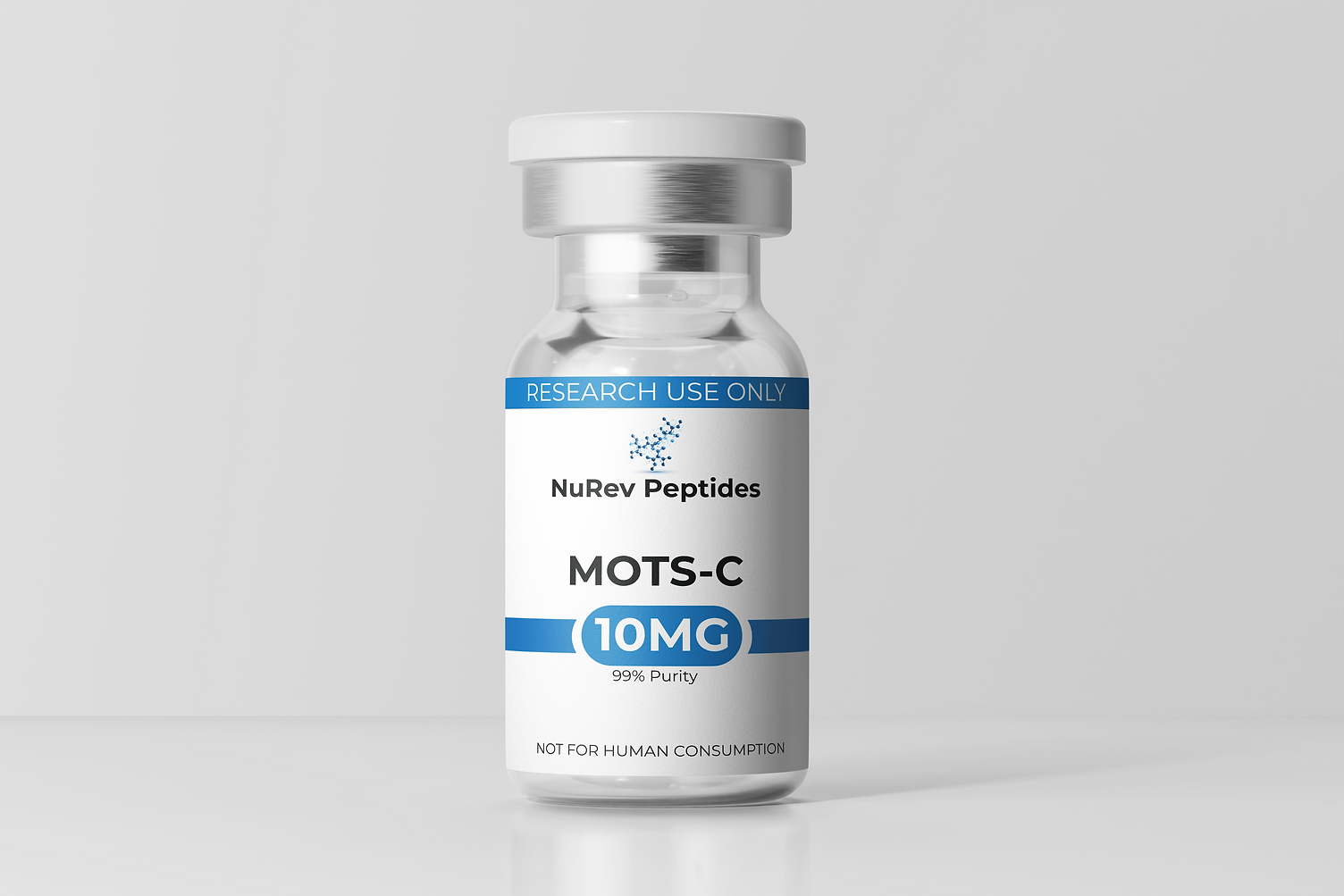
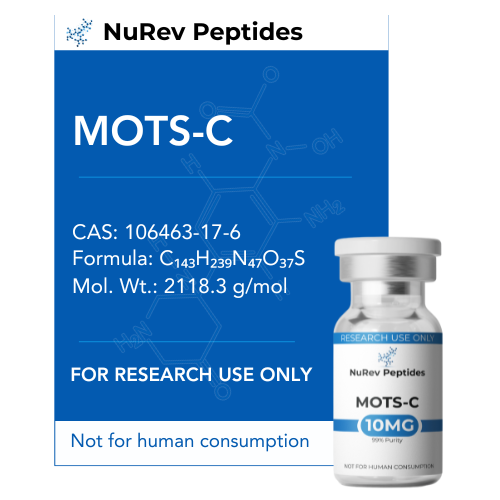
MOTS-C 10MG
$99.99
Description
Buy MOTS-c at NuRev Peptides: Complete Research Guide
Research into mitochondrial-derived peptides has expanded rapidly, offering new insights into cellular metabolism, energy balance, and aging biology. Scientists looking to purchase MOTS-c for controlled laboratory studies require material that meets strict purity specifications and includes full analytical documentation. MOTS-c — a 16-amino-acid peptide encoded within the mitochondrial genome — has become an important research tool for investigating metabolic regulation and age-related pathways.
The peptide originates from an open reading frame within the 12S rRNA gene of the mitochondrial genome. Studies show that this mitochondrial-derived peptide plays a meaningful role in systemic metabolic regulation, making MOTS-c a valuable compound for researchers examining cellular homeostasis and metabolic function.
Molecular Structure of MOTS-c
MOTS-c is defined by a precise 16-amino-acid sequence composed of arginine (Arg), tryptophan (Trp), glutamine (Gln), glutamic acid (Glu), glycine (Gly), tyrosine (Tyr), isoleucine (Ile), phenylalanine (Phe), plus additional amino acids in a compact functional chain. The full sequence is:
Arg–Trp–Gln–Glu–Met–Gly–Tyr–Ile–Phe–Tyr–Pro–Arg–Lys–Leu–Arg
This mitochondrial-derived peptide is one of several peptides encoded by mitochondrial open reading frames. With a molecular weight of 2174.59 Da, MOTS-c falls within the range suitable for effective cellular investigation and biological activity in experimental settings.
Understanding Cellular Signaling: Key MOTS-c Mechanisms and Research Findings
Scientific studies indicate that MOTS-c functions as an important regulator of metabolic signaling by engaging the AMP-activated protein kinase (AMPK) pathway. Maintaining mitochondrial function requires coordinated signals between nuclear and mitochondrial genomes, and MOTS-c is one of the key peptides involved in this communication.
Experimental data show that MOTS-c can influence glucose metabolism via AMPK activation, regulate nuclear gene expression through modulation of the folate cycle, and affect multiple cellular metabolic processes. Additional studies have found that MOTS-c may enhance insulin sensitivity in skeletal muscle through increased glucose uptake.
Primary Research Targets Include:
- AMPK Pathway: Identified as the primary regulatory target in MOTS-c studies
- Glucose Homeostasis: Observed effects on glucose utilization and metabolic control
- Lipid Metabolism: Findings indicate roles in fat regulation and adipose homeostasis
- Insulin Sensitivity: Laboratory data suggest impacts on insulin-resistance mechanisms
Age-related declines in circulating MOTS-c levels have made this peptide especially relevant in metabolic and longevity research. Evidence indicates roles in muscle metabolism, cellular energy balance, and stress-response signaling.
Research Studies on MOTS-c
MOTS-c has been examined extensively across various research fields. Investigators studying metabolic regulation often utilize this peptide in receptor-binding assays, enzyme-activity studies, and cell-proliferation models to understand its biochemical functions.
Current Research Applications:
- Metabolic Studies: Glucose homeostasis and systemic metabolic responses
- Cellular Metabolism: Mitochondrial function and energy-production pathways
- Bone Research: Effects on mesenchymal stem cells and osteogenic differentiation
- Cardiovascular Research: Endothelial function and coronary endothelial dysfunction
- Aging Research: Age-dependent physical decline and longevity-related mechanisms
Research has shown that MOTS-c influences cellular responses involving endothelial cells and stem cells. The same protocols demonstrating improvements in osteoporosis-related parameters are now guiding additional studies into metabolic disorders. Work by Kim et al. and other investigators continues to highlight the peptide’s relevance in metabolic dysfunction research.
Experimental designs often assess how MOTS-c differentially activates or inhibits pathways, especially in models of diet-induced obesity or ovariectomy-induced metabolic disruption. Additional research methods include cell-viability studies and bone-marrow assays.
Storage and Safety
Maintaining MOTS-c stability requires adherence to proper handling and storage conditions. The lyophilized peptide should be stored under controlled temperature settings to preserve its molecular integrity throughout experimental use.
Storage Requirements:
- Long-Term Storage: –20°C recommended for extended preservation
- Environmental Protection: Keep protected from direct light and moisture
- Handling Protocol: Allow vials to reach room temperature before opening
- Reconstituted Solutions: Stable for 3+ weeks at +4°C and 3–4 months at –20°C
Disclaimer: The products mentioned are not intended for human or animal consumption. Research chemicals are intended solely for laboratory experimentation and/or in-vitro testing. Bodily introduction of any sort is strictly prohibited by law. All purchases are limited to licensed researchers and/or qualified professionals. All information shared in this article is for educational purposes only.
Reviews
There are no reviews yet.